

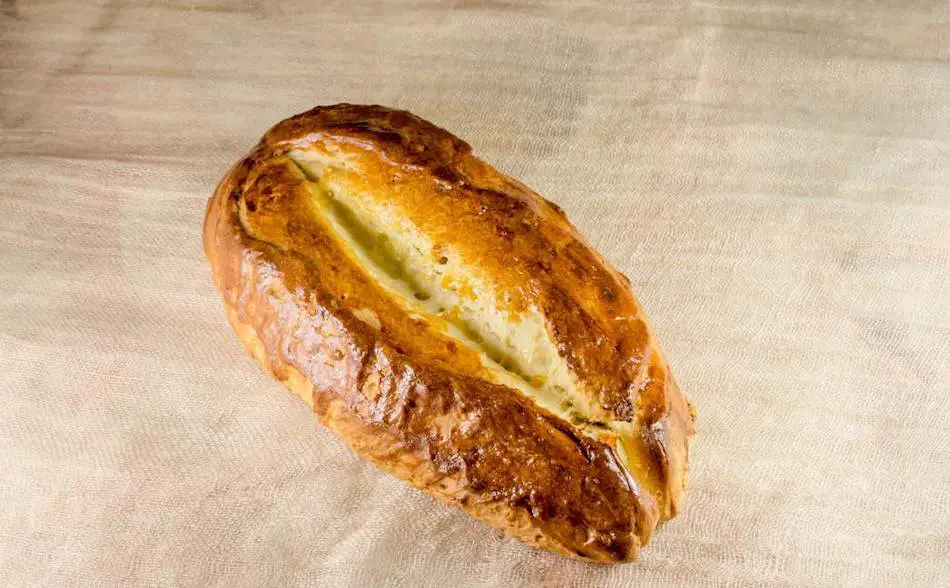
Discover the reasons why your French bread may be coming out too chewy and learn how to fix it with this comprehensive guide. From gluten development to baking techniques, we will explore the various factors that contribute to the texture of French bread. In this article, we’ll provide you with the knowledge and tips you need to make delicious, crusty French bread every time.
French bread can become chewy due to a lack of gluten development, which is the protein in flour that gives bread its structure. This can happen if the dough is not kneaded enough or if the fermentation process is not long enough. Additionally, the bread can become chewy if it is undercooked or if the oven temperature is not hot enough, which can cause the bread to steam and prevent it from getting a crispy crust.
The Role of Gluten Development in French Bread Texture
As a regular bread baker, I can tell you that gluten development is a crucial aspect of French bread-making. Gluten is the protein in flour that gives bread its structure, and it needs to be developed through kneading and fermentation in order for the bread to have the proper texture.
When the dough is kneaded, the gluten proteins are activated and begin to form long chains, which give the dough its elasticity and ability to rise. If the dough is not kneaded enough or if the fermentation process is not long enough, the gluten will not be developed properly, resulting in a chewy texture in the final bread.
In French bread-making, a long fermentation time is crucial to develop the gluten and get the characteristic open crumb and crisp crust.
The Importance of Kneading and Fermentation for French Bread
Kneading is essential for developing the gluten in the dough, which gives the bread its structure and texture. The more you knead the dough, the more gluten is developed, and the more elastic and extensible the dough becomes.
Proper kneading also helps to distribute the yeast evenly throughout the dough, which is important for fermentation. Fermentation, in turn, is vital for the development of flavor and texture in French bread.
The yeast consumes the sugars in the dough and produces carbon dioxide, which causes the dough to rise. Fermentation also contributes to the development of the gluten and the characteristic open crumb and crisp crust of French bread.
Without proper kneading and fermentation, the bread will lack the structure and flavor that makes French bread so unique and delicious.
Avoiding Undercooking for the Perfect French Bread Texture
When it comes to French bread-making, avoiding undercooking is crucial to achieving the perfect texture. French bread should have a crispy, golden-brown crust and a light, airy interior.
If the bread is undercooked, the crust will not be crisp, and the bread will be dense and chewy. To ensure that your bread is fully cooked, it is important to use a thermometer to check the internal temperature of the bread. It should reach an internal temperature of at least 190-200°F.
Additionally, it’s important to pay attention to the color of the crust. The bread is ready when it reaches a deep golden-brown color.
Another way to ensure a perfect texture is to use steam during the baking process. This can be achieved by placing a tray of hot water on the bottom of the oven, or by misting the bread with water before placing it in the oven.
This will create a moist environment that will help to keep the crust from hardening too quickly, and will also allow the bread to rise properly.
By following these tips, you’ll be able to avoid undercooking and achieve the perfect French bread texture every time.
Oven Temperature and its Effect on French Bread Texture
When it comes to French bread-making, the oven temperature plays a crucial role in achieving the perfect texture.
French bread should have a crispy, golden-brown crust and a light, airy interior. If the oven temperature is too low, the bread will not be able to rise properly, and the crust will not be crisp.
A good oven temperature for French bread is around 450-500°F. It’s important to preheat the oven to the desired temperature before baking the bread to ensure that it will be at the correct temperature when the bread is placed inside.
Another important aspect to consider is the steam. French bread needs a moist environment to develop properly. This can be achieved by placing a tray of hot water on the bottom of the oven, or by misting the bread with water before placing it in the oven.
This will help to keep the crust from hardening too quickly, and will also allow the bread to rise properly.
By paying attention to the oven temperature and to the steam, you’ll be able to achieve the perfect French bread texture every time.
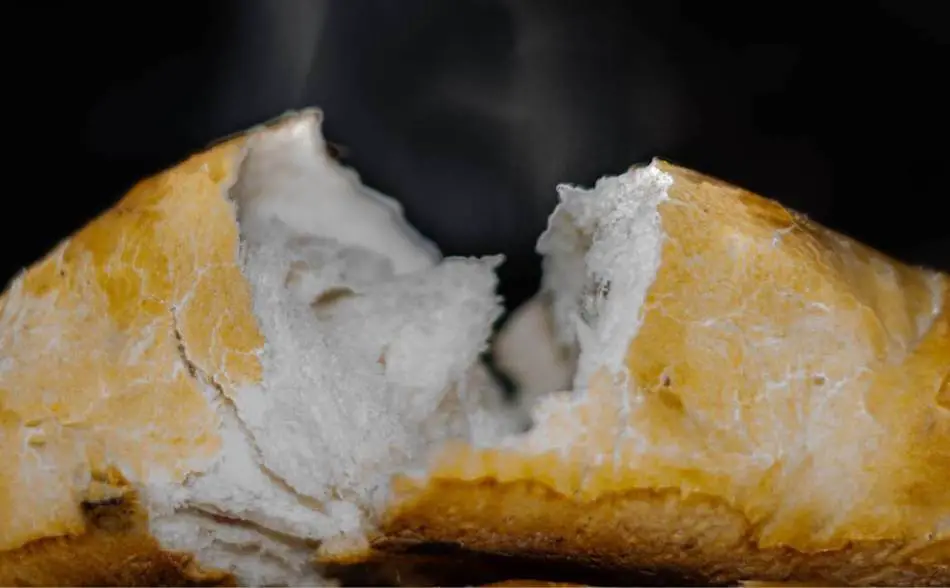
The Science of French Bread-Making: Understanding Chewiness
To understand chewiness in French bread, it’s important to understand the role of gluten development, fermentation and baking techniques.
Gluten is a protein found in flour that gives bread its structure. When the dough is kneaded, the gluten proteins are activated and begin to form long chains, which give the dough its elasticity and ability to rise.
If the dough is not kneaded enough or if the fermentation process is not long enough, the gluten will not be developed properly, resulting in a chewy texture in the final bread.
Fermentation also plays a crucial role in bread-making. Yeast consumes the sugars in the dough and produces carbon dioxide, which causes the dough to rise.
Fermentation also contributes to the development of the gluten and the characteristic open crumb and crisp crust of French bread. Without proper fermentation, bread will lack the structure and flavor that makes French bread so unique and delicious.
Finally, baking technique is also important. French bread should have a crispy, golden-brown crust and a light, airy interior. If the bread is undercooked, the crust will not be crisp, and the bread will be dense and chewy.
By understanding the science behind these three elements, you can avoid common mistakes and achieve the perfect texture and taste in your French bread every time.
Troubleshooting Techniques for Chewy French Bread
Troubleshooting chewy French bread can be a challenge, but by understanding the underlying causes and taking a systematic approach, you can quickly identify and fix the problem.
One of the most common causes of chewy French bread is a lack of gluten development. To test for this, try stretching a small piece of dough. If it stretches easily and doesn’t break, the gluten has been developed enough. If it tears easily, it needs more kneading.
Another common cause of chewy bread is under-fermentation. To test for this, gently press the dough with your finger. If it springs back quickly, it’s ready to be shaped. If it doesn’t spring back, it needs more fermentation time.
Undercooking is also a common cause of chewy French bread. To test for this, check the internal temperature of the bread with a thermometer, it should reach an internal temperature of at least 190-200°F.
Additionally, it’s important to pay attention to the color of the crust. The bread is ready when it reaches a deep golden-brown color.
By following these troubleshooting techniques, you’ll be able to quickly identify and fix the problem, and achieve the perfect French bread texture every time.
The Chewy French Bread Conundrum: Solved
The chewy French bread conundrum can be a frustrating challenge for bakers. However, by understanding the underlying causes and taking a systematic approach, you can quickly identify and fix the problem.
One of the most common causes of chewy French bread is a lack of gluten development. To fix this, ensure that the dough is kneaded enough and that the fermentation process is long enough to develop the gluten properly.
Another common cause of chewy bread is under-fermentation. To fix this, ensure that the dough has enough fermentation time to fully develop the flavor and structure of the bread.
Undercooking is also a common cause of chewy French bread. To fix this, ensure that the bread is fully cooked by using a thermometer to check the internal temperature of the bread, it should reach an internal temperature of at least 190-200°F.
Additionally, ensure that the crust reaches a deep golden-brown color
By following these troubleshooting techniques and understanding the underlying causes, you can quickly identify and fix the problem, and achieve the perfect French bread texture every time.
Improving French Bread Texture through Proper Baking Techniques
Improving French bread texture requires a combination of proper baking techniques and understanding of the science behind the bread-making.
One of the most important techniques is to ensure that the dough is kneaded enough and that the fermentation process is long enough to develop the gluten properly. The gluten gives the bread its structure and texture.
Another important technique is to ensure that the bread is fully cooked. French bread should have a crispy, golden-brown crust and a light, airy interior.
To ensure that your bread is fully cooked, it is important to use a thermometer to check the internal temperature of the bread, it should reach an internal temperature of at least 190-200°F.
Also, pay attention to the color of the crust. The bread is ready when it reaches a deep golden-brown color.
Another technique to improve the texture of French bread is to use steam during the baking process. This can be achieved by placing a tray of hot water on the bottom of the oven, or by misting the bread with water before placing it in the oven.
This will create a moist environment that will help to keep the crust from hardening too quickly, and will also allow the bread to rise properly.
By following these techniques, you’ll be able to improve the texture of your French bread and achieve the perfect crust and crumb every time.
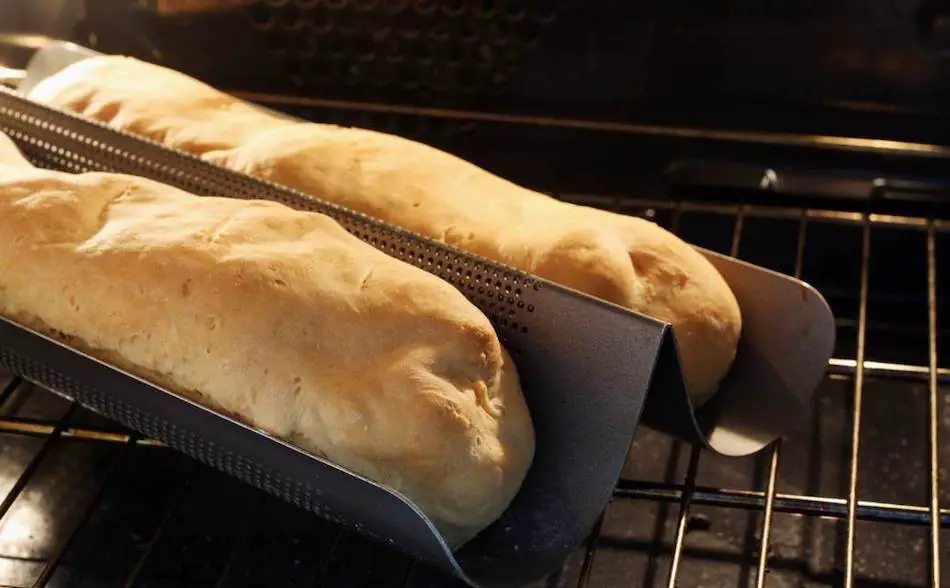
The Key Ingredient for Crispy French Bread: Steam
Steam is a key ingredient for achieving a crispy crust in French bread. The steam helps to keep the crust from hardening too quickly, which allows the bread to rise properly.
This results in a light, airy interior and a crispy, golden-brown crust. There are several ways to add steam to your bread while it bakes:
- Placing a tray of hot water on the bottom of the oven: Before you put your bread in the oven, place a tray of hot water on the bottom rack. This will create steam as the bread bakes.
- Misting the bread with water before baking: Using a spray bottle, mist the bread with water before placing it in the oven. This will create steam as the bread bakes.
- Scoring the bread before baking: Scoring the bread (making shallow cuts on the surface of the bread) before baking allows the bread to expand and creates the characteristic “ears” on the crust. This also helps to release steam from the bread as it bakes.
By adding steam to the baking process, you’ll be able to achieve a crispy crust in your French bread every time.
The French Bread-Making Method: From Chewy to Crispy
The French bread-making method is a delicate balance of science and art, that when executed correctly, leads to a crispy crust and a light, airy interior.
The first step in the process is to make the dough. This involves mixing flour, yeast, salt, and water together until a dough forms.
The dough is then kneaded for several minutes to activate the gluten, which gives the bread its structure and texture. It’s important to knead the dough enough, so the gluten is properly developed.
The next step is fermentation, the dough is left to rise for several hours. During this time, the yeast consumes the sugars in the dough and produces carbon dioxide, which causes the dough to rise.
Fermentation also contributes to the development of the gluten and the characteristic open crumb and crisp crust of French bread.
The final step is baking, the dough is shaped, scored and placed in a preheated oven at high temperature, usually around 450-500°F.
To achieve a crispy crust, it is important to add steam to the baking process, this can be achieved by placing a tray of hot water on the bottom of the oven, or by misting the bread with water before placing it in the oven.
This will create a moist environment that will help to keep the crust from hardening too quickly, and will also allow the bread
French Bread-Making 101: Understanding and Avoiding Chewiness
When it comes to French bread-making, avoiding chewiness is crucial to achieving the perfect texture. The key to avoiding chewiness is to understand the science behind the bread-making process and to pay close attention to the details.
First, the dough should be kneaded enough and left to ferment for a sufficient amount of time to develop the gluten properly.
Gluten is a protein found in flour that gives bread its structure and texture, and when the dough is not kneaded enough or if the fermentation process is not long enough, the gluten will not be developed properly, resulting in a chewy texture in the final bread.
Second, it’s important to ensure that the bread is fully cooked. French bread should have a crispy, golden-brown crust and a light, airy interior.
To ensure that your bread is fully cooked, it is important to use a thermometer to check the internal temperature of the bread, it should reach an internal temperature of at least 190-200°F.
Additionally, pay attention to the color of the crust. The bread is ready when it reaches a deep golden-brown color.
Finally, the use of steam during the baking process is also important. This can be achieved by placing a tray of hot water on the bottom of the oven, or by misting the bread with water before placing it in the oven.
This will create a moist environment that will help to keep the crust from hardening too quickly, and will also allow the bread to rise properly.
The French Bread-Making Process: Understanding and Improving Texture
When it comes to French bread-making, understanding and improving texture is crucial to achieving the perfect result. The key to improving texture is to understand the science behind the bread-making process and to pay close attention to the details during each step.
First, it’s important to use high-quality ingredients, such as bread flour, yeast, salt, and water. These ingredients, when combined together and handled correctly, will give you the structure, flavor and aroma of a perfect French bread.
Next, the dough should be kneaded enough and left to ferment for a sufficient amount of time to develop the gluten properly.
Gluten is a protein found in flour that gives bread its structure and texture, and when the dough is not kneaded enough or if the fermentation process is not long enough, the gluten will not be developed properly, resulting in a chewy texture in the final bread.
It’s also important to pay attention to the shaping, scoring, and baking technique, shaping the dough into the desired shape, scoring the top of the dough with a sharp knife, and baking it in a preheated oven at high temperature, usually around 450-500°F.
Finally, the use of steam during the baking process is also important. This can be achieved by placing a tray of hot water on the bottom of the oven, or by misting the bread with water before placing it in the oven.
This will create a moist environment that will help to keep the crust from hardening too quickly, and will also allow the bread to rise properly.
The Chewy French Bread Mystery: Unveiling the Causes
The chewy French bread mystery can be frustrating for bakers, but by understanding the underlying causes, you can take steps to prevent it from happening.
One of the most common causes of chewy French bread is a lack of gluten development. Gluten is a protein found in flour that gives bread its structure, and when the dough is not kneaded enough or if the fermentation process is not long enough, the gluten will not be developed properly, resulting in a chewy texture in the final bread.
Another common cause of chewy bread is under-fermentation. Fermentation is a crucial step in bread-making.
Yeast consumes the sugars in the dough and produces carbon dioxide, which causes the dough to rise. Fermentation also contributes to the development of the gluten and the characteristic open crumb and crisp crust of French bread.
If the dough is not fermented enough, the bread will lack the structure and flavor that makes French bread so unique and delicious.
Undercooking is also a common cause of chewy French bread. French bread should have a crispy, golden-brown crust and a light, airy interior.
If the bread is undercooked, the crust will not be crisp, and the bread will be dense and chewy.
By understanding these underlying causes, you can take steps to prevent chewy French bread, by ensuring that the dough is kneaded enough, fermented enough, and baked at the correct temperature and timing.
Mastering the French Bread-Making Techniques: Achieving the Perfect Texture
Mastering the French bread-making techniques is essential for achieving the perfect texture. The key to mastering these techniques is to understand the science behind the bread-making process, and to pay close attention to the details during each step.
First, it’s important to use high-quality ingredients, such as bread flour, yeast, salt, and water. These ingredients, when combined together and handled correctly, will give you the structure, flavor and aroma of a perfect French bread.
Next, the dough should be kneaded enough and left to ferment for a sufficient amount of time to develop the gluten properly.
Gluten is a protein found in flour that gives bread its structure and texture, and when the dough is not kneaded enough or if the fermentation process is not long enough, the gluten will not be developed properly, resulting in a chewy texture in the final bread.
Proper shaping, scoring, and baking technique are also essential, shaping the dough into the desired shape, scoring the top of the dough with a sharp knife, and baking it in a preheated oven at high temperature, usually around 450-500°F.
Finally, the use of steam during the baking process is also important. This can be achieved by placing a tray of hot water on the bottom of the oven, or by misting the bread with water before placing it in the oven. This will create a moist environment that will help to keep the crust from hardening too quickly, and will also allow the bread to rise properly.
By understanding the science behind the bread-making process and mastering these techniques, you’ll be able to achieve the perfect texture in your French bread every time.
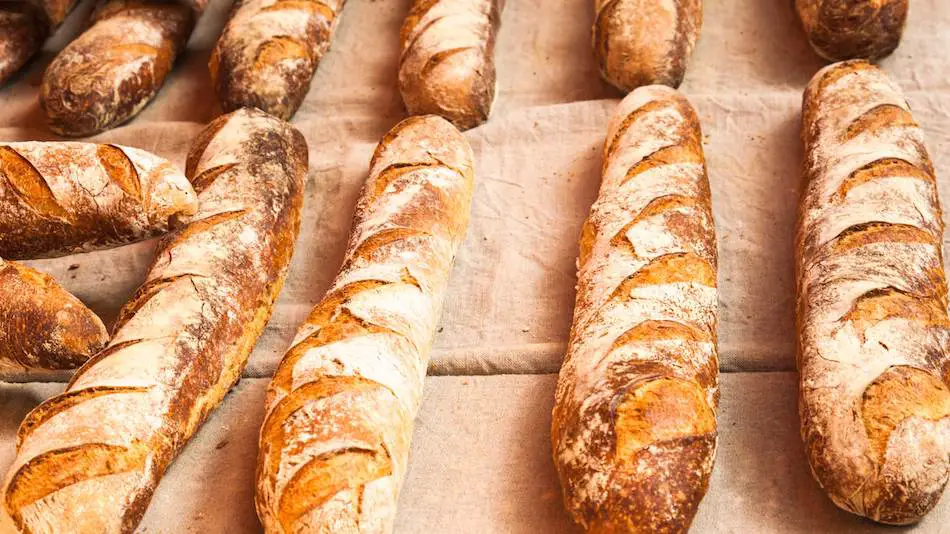
The Art of French Bread-Making: Overcoming the Chewiness Challenge
French bread-making is a delicate balance of science and art. Understanding and mastering the techniques involved in the bread-making process is essential for overcoming the chewiness challenge and achieving the perfect texture.
The first step in overcoming the chewiness challenge is to use high-quality ingredients and handle them correctly. This includes using bread flour, yeast, salt and water in the right proportions.
Next, mastering the kneading technique is essential, as it activates the gluten and gives the bread its structure. A proper kneading technique will develop the gluten in the dough, which is important for the bread’s texture and rise.
Fermentation is another important step, it allows the yeast to consume the sugars in the dough and produce carbon dioxide, which causes the dough to rise. Fermentation also contributes to the development of the gluten and the characteristic open crumb and crisp crust of French bread.
Proper shaping, scoring, and baking technique are also essential, shaping the dough into the desired shape, scoring the top of the dough with a sharp knife, and baking it in a preheated oven at high temperature, usually around 450-500°F.
Finally, the use of steam during the baking process is also important. This can be achieved by placing a tray of hot water on the bottom of the oven, or by misting the bread with water before placing it in the oven.
This will create a moist environment that will help to keep the crust from hardening too quickly, and will also allow the bread to rise properly.
The French Bread-Making Journey: Understanding and Improving Texture
The French bread-making journey is a fascinating and rewarding one, but it can also be challenging, especially when it comes to achieving the perfect texture.
Understanding the science behind the bread-making process and paying close attention to the details during each step is essential for improving texture.
First, it’s important to use high-quality ingredients, such as bread flour, yeast, salt, and water. These ingredients, when combined together and handled correctly, will give you the structure, flavor, and aroma of a perfect French bread.
Next, the dough should be kneaded enough and left to ferment for a sufficient amount of time to develop the gluten properly.
Gluten is a protein found in flour that gives bread its structure and texture, and when the dough is not kneaded enough or if the fermentation process is not long enough, the gluten will not be developed properly, resulting in a chewy texture in the final bread.
Proper shaping, scoring, and baking technique are also essential, shaping the dough into the desired shape, scoring the top of the dough with a sharp knife, and baking it in a preheated oven at high temperature, usually around 450-500°F.
Finally, the use of steam during the baking process is also important. This can be achieved by placing a tray of hot water on the bottom of the oven, or by misting the bread with water before placing it in the oven.
This will create a moist environment that will help to keep the crust from hardening too quickly, and will also allow the bread to rise properly.
By understanding the science behind the bread-making process and mastering these techniques, you’ll be able to improve the texture of your French bread and make a delicious, mouth-watering bread every time.
French Bread-Making: Troubleshooting Chewiness and Achieving Perfection
French bread-making is an art and science that requires attention to detail, patience and a good understanding of the bread-making process.
One of the most common issues that bakers face is chewiness, which can be frustrating and can take away from the perfect texture and taste of the bread.
To troubleshoot chewiness and achieve perfection, it’s important to focus on the key elements of bread-making, starting with the ingredients.
Using high-quality bread flour, yeast, salt, and water is essential for achieving the perfect texture and flavor.
Next, mastering the kneading technique is essential, as it activates the gluten and gives the bread its structure. A proper kneading technique will develop the gluten in the dough, which is important for the bread’s texture and rise.
Fermentation is another important step, it allows the yeast to consume the sugars in the dough and produce carbon dioxide, which causes the dough to rise. Fermentation also contributes to the development of the gluten and the characteristic open crumb and crisp crust of French bread.
Proper shaping, scoring, and baking technique are also essential, shaping the dough into the desired shape, scoring the top of the dough with a sharp knife, and baking it in a preheated oven at high temperature, usually around 450-500°F.
Finally, the use of steam during the baking process is also important. This can be achieved by placing a tray of hot water on the bottom of the oven, or by misting the bread with water before placing it in the oven.
This will create a moist environment that will help to keep the crust from hardening too quickly, and will also allow the bread to rise properly.
The French Bread-Making Experience: From Chewy to Crispy
The French bread-making experience is a journey that can take you from chewy to crispy with the right understanding and techniques.
To achieve a crispy crust and light, airy interior, it’s essential to focus on the key elements of bread-making, starting with the ingredients. Using high-quality bread flour, yeast, salt, and water is essential for achieving the perfect texture and flavor.
Next, mastering the kneading technique is essential, as it activates the gluten and gives the bread its structure. A proper kneading technique will develop the gluten in the dough, which is important for the bread’s texture and rise.
Fermentation is another important step, it allows the yeast to consume the sugars in the dough and produce carbon dioxide, which causes the dough to rise. Fermentation also contributes to the development of the gluten and the characteristic open crumb and crisp crust of French bread.
Proper shaping, scoring, and baking technique are also essential, shaping the dough into the desired shape, scoring the top of the dough with a sharp knife, and baking it in a preheated oven at high temperature, usually around 450-500°F.
Finally, the use of steam during the baking process is also important. This can be achieved by placing a tray of hot water on the bottom of the oven, or by misting the bread with water before placing it in the oven.
This will create a moist environment that will help to keep the crust from hardening too quickly, and will also allow the bread to rise properly.
By focusing on these key elements and mastering the techniques, you’ll be able to take your French bread-making experience from chewy to crispy, achieving the perfect texture and flavor every time.
French Bread-Making: Understanding and Improving Texture
French bread-making is a delicate balance of science and art that requires attention to detail, patience, and a good understanding of the bread-making process.
One of the most important aspects of bread-making is understanding and improving texture. To achieve a crispy crust and light, airy interior, it’s essential to focus on the key elements of bread-making, starting with the ingredients.
Using high-quality bread flour, yeast, salt, and water is essential for achieving the perfect texture and flavor.
Next, mastering the kneading technique is essential, as it activates the gluten and gives the bread its structure. A proper kneading technique will develop the gluten in the dough, which is important for the bread’s texture and rise.
Fermentation is another important step, it allows the yeast to consume the sugars in the dough and produce carbon dioxide, which causes the dough to rise. Fermentation also contributes to the development of the gluten and the characteristic open crumb and crisp crust of French bread.
Proper shaping, scoring, and baking technique are also essential, shaping the dough into the desired shape, scoring the top of the dough with a sharp knife, and baking it in a preheated oven at high temperature, usually around 450-500°F.
Finally, the use of steam during the baking process is also important. This can be achieved by placing a tray of hot water on the bottom of the oven, or by misting the bread with water before placing it in the oven.
This will create a moist environment that will help to keep the crust from hardening too quickly, and will also allow the bread to rise properly.
By focusing on these key elements and mastering the techniques, you’ll be able to understand and improve the texture of your French bread, achieving the perfect crust and light, airy interior every time.
The French Bread-Making Puzzle: Solving the Chewiness Issue
Discover the reasons why your French bread may be coming out too chewy and learn how to fix it with this comprehensive guide. From gluten development to baking techniques, we will explore the various factors that contribute to the texture of French bread.
Whether you’re a seasoned baker or a beginner, this article will provide you with the knowledge and tips you need to make delicious, crusty French bread every time.
With expert insights and step-by-step instructions, you’ll be able to master the art of French bread-making and impress your family and friends with your baking skills.
So, if you’re ready to take your bread-making to the next level, read on to learn how to make the perfect French bread.